RYA Day Skipper Theory Syllabus
The RYA Day Skipper Sailing Theory provides a comprehensive introduction to chart work, navigation, meteorology and the basics of seamanship.
RYA Day Skipper Theory Syllabus
1. Nautical terms
Working knowledge of
- Parts of a boat and hull
- General nautical terminology
2. Ropework
Working knowledge of
- The properties of synthetic ropes in common use
3. Anchorwork
Working knowledge of
- Characteristics of different types of anchor
- Considerations to be taken into account when anchoring
4. Safety
Working knowledge of
- The safety equipment to be carried, its stowage and use (See RYA Boat Safety Handbook, C103)
- Fire precautions and fire fighting
- Use of personal safety equipment, harnesses and lifejackets
- Ability to send a distress signal by DSC and VHF voice
- Basic knowledge of rescue procedures including helicopter rescue
5. International Regulations for Preventing Collisions at Sea
Full knowledge of
- Steering and sailing rules (5,7,8,9,10 and 12-19)
Working knowledge of
General rules (all other rules)
6. Definition of position, course and speed
Working knowledge of
- Latitude and longitude
- Standard navigational terms
- True bearings and courses
Outline knowledge of
- The knot
7. Navigational charts and publications
Working knowledge of
- Information shown on charts, chart symbols and representation of direction and distance
Outline knowledge of
- Navigational publications in common use
- Chart correction
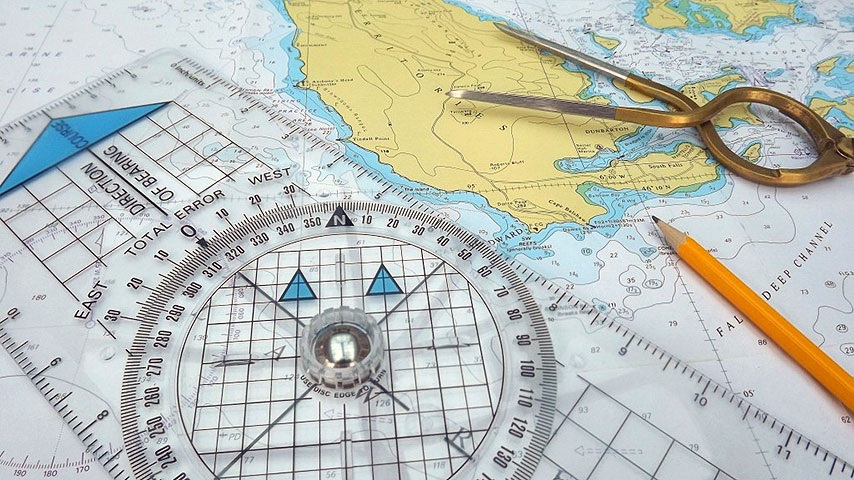
8. Navigational drawing instruments
Working knowledge of
- Use of parallel rulers, dividers, and proprietary plotting instruments
9. Compass
Working knowledge of
- Application of variation
- Use of hand-bearing compass
Outline knowledge of
- Deviation and its causes
10. Chartwork
Full knowledge of
- Use of waypoints to fix position
Working knowledge of
- Dead reckoning and estimated position including an awareness of leeway
- Techniques of visual fixing
- Satellite-derived positions
- Use of waypoints to fix position
- Course to steer
11. Tides and tidal streams
- Working knowledge of
- Tidal definitions, levels and datum
- Tide tables
- Use of Admiralty method of determining tidal height at standard port and awareness of corrections for secondary ports
- Use of tidal diamonds and tidal stream atlases for chartwork
12. Visual aids to navigation
Working knowledge of
- Lighthouses and beacons, light characteristics
13. Meteorology
Working knowledge of
- Sources of broadcast meteorological information
- Knowledge of terms used in shipping forecasts, including the Beaufort scale, and their significance to small craft
Outline knowledge of
- Basic knowledge of highs, lows and fronts
14. Passage planning
Full knowledge of
- Importance of confirmation of position by an independent source
- Keeping a navigational record
Working knowledge of
- Use of waypoints on passage
Outline knowledge of
- Preparation of navigational plan for short coastal passages
- Meteorological considerations in planning short coastal passages
15. Navigation in restricted visibility
Working knowledge of
- Precautions to be taken in, and limitations imposed by fog
16. Pilotage
Working knowledge of
- Use of transits, leading lines and clearing bearings
- IALA system of buoyage for Region A
- Use of sailing directions
- Pilotage plans and harbour entry
17. Marine environment
Working knowledge of
- Responsibility for avoiding pollution and protecting the marine environment